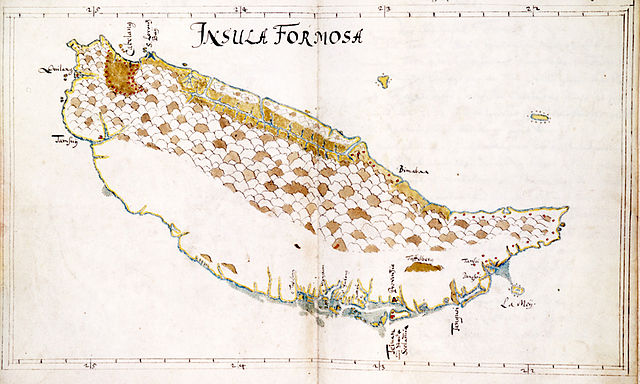
I was reading about Taiwan in class, and a term that the professor and the students thought to be an interesting concept is “Co-colonization”. This term is coined by historian Andrade when he was talking about Taiwan colonization. When he was describing the relationship the colonizers and the ones being colonized, he carefully chose the term “co-colonization”, which implies a cooperative relationship (this implication will appear in later paragraphs). But before we dive into what this co-colonization means, let’s have a refresher on Taiwan history.
Brief History
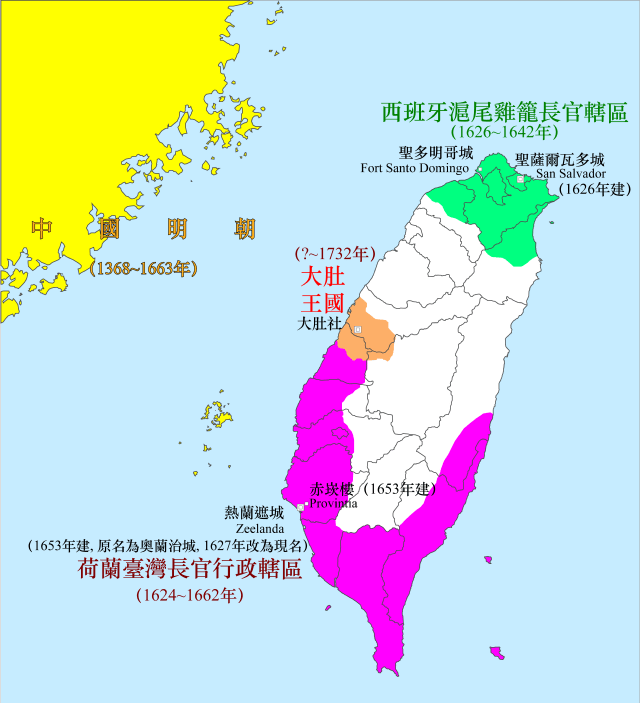
Let’s have a sense of what time we’re talking about. We are talking about the period from 1624 to 1662. A more intuitive description of this time period would be “around a century before the Americans established their independence”. Taiwan, at that time, is a haven for pirates because of its geographical location with respect to mainland China (under the rule of the Ming Dynasty). Due to the maritime prohibitions from the Ming Court (the government), smuggling and piracy are pretty common around the Taiwan Strait. Thus, Taiwan offers great opportunity for trading and economic expansions. The Dutch and Spanish established their own respective colonies in the south and north of Taiwan and expanded their trading empire. However, we won’t talk about Spanish. We’ll focus on the Dutch.
Instead of colonizing Taiwan with Dutch people, the Dutch used another method of colonization. They provide huge incentives for people across the Taiwan Strait (Fujian Province) such as land, property, and economic rewards. As a result, a lot of Chinese people across the strait came to populate the Taiwanese lands. As expected, some friction between the Chinese and the aborigines was inevitable. However, the aborigines still inhabit most of the land (Center to East coast of Taiwan). Anyways, the pattern that Dutch people provided administration and protection to the Chinese while the Chinese provided economic profit towards the administration was coined as a “co-colonization” of Taiwan by Andrade.
For more information, you can go to Andrade’s personal website here and this Wikipedia article here.
Co-colonization
Co-colonization is an interesting concept because it implies a cooperation between two parties, both colonizing an area. Different from normal colonization, which consists of the one colonizing and the one being colonized, co-colonization suggests several factors: first, there are multiple parties participating in colonization; second, the multiple parties are engaging in cooperative manners; and third, the parties have continued colonizing the area without conflict among the parties.
From this point of view, I agree with the concept of co-colonization. There are two parties of interest: the Dutch and the Chinese. Those two parties are engaging in cooperative manners: the Dutch provides security, incentive, and government administration for the Chinese, while the Chinese provides agriculture and economic profit for the Dutch. They continued to colonize the land of Taiwan, as opposed to the aborigines in Taiwan, for a number of years until the Dutch was kicked out by Koxinga. It might be slightly unconvincing for the fact that the Chinese are not included into the Dutch administration (with only 2 Chinese in the Board of Aldermen). It might be also unconvincing that the aborigines are not colonized (the Dutch occupied the south while the Spanish, on the other hand, occupied the north, but the aborigines still control the rest of the land). However, co-colonization stems from the standpoint that the land of Taiwan is being colonized rather than the Chinese people are being colonized. Although there are some inequalities between the parties colonizing the land, they are, still, colonizers. The Dutch cannot continue their colonization without the agricultural effort from the Chinese, while the Chinese cannot continue their settlement without the administrative effort from the Dutch. For the case of the incompleteness of colonization, it is, in my opinion, irrelevant. Similar to the colonization of America, the colonization of Taiwan stands to be, in fact, a legitimate colonization.
In conclusion, co-colonization proved to be a relatively accurate description of the dynamic between the Chinese and the Dutch during the colonization of Taiwan. Of course, there could always be a better concept to describe this unique cooperative cycle between the two parties while reflecting the process of colonization. Nevertheless, if we analyze this relationship from the view that “the two parties struck a dynamic relationship while colonizing the same area”, it’s undoubtedly true that co-colonization, or to be more accurate, cooperative colonization, can describe this relationship.
Piracy and Smuggling
Since we are in this period of Ming rule, let’s also talk about piracy. However, instead of focusing on their history and their loots and raids, let’s view this from another perspective: who are they, and what purpose do they serve in terms of Taiwan history?
Pirates are people who utilize naval strengths and influence to smuggle, raid, and possibly intrude properties to profit from direct looting. In the case of pirates within the vicinity of the Taiwan Strait, there are the Japanese pirates and the Chinese pirates themselves. While the Japanese pirates (倭寇) continue to loot from Ming victims along the 16th century, which will express a decline around the mid-16th century with the eventual implementation of “the recruitment of mercenaries from the local civilian population” (Cheng 3), Chinese pirates, on the other hand, diverge themselves in various situations. There are pirates who cooperate with the Japanese pirates with the looting; there are pirates who also participate in raiding villages around the Chinese east coast; there are also pirates who form pirate groups and wage warfare with other groups; last but not least, there are pirates who are appointed into office by the Ming dynasty such as the infamous Iquan (鄭芝龍). Interestingly, pirates, sometimes also acting as smugglers, participate in trading, both legally and illegally.
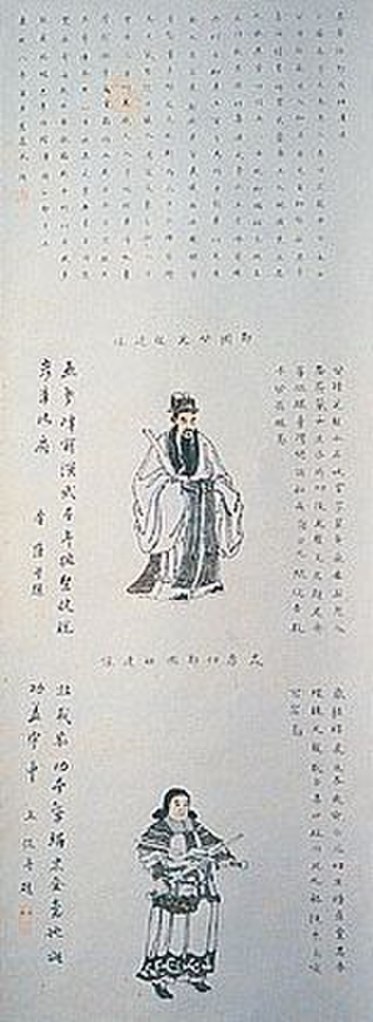
The role of the pirates around the Taiwan Strait is to ultimately promote trading between different entities regardless of legality and personally benefit through raids. For example, the presence of the Portuguese in Macau facilitates the smuggling activities in the Sino-Japanese trade since the Ming Dynasty refuses to establish Japan as a trade partner due to Japanese internal struggles and external aspirations (Cheng 6). During this period, pirates act as looters and smugglers, smuggling silver, silk, spices, and other goods from China to other countries, mainly the Japanese and other Asian countries. Of course, Taiwan, at that time, serves as a convenient resting spot for pirates and provides traders and smugglers a huge advantage in trading routes because of its prime geographical location. Similarly, the Dutch, then colonizing Taiwan during the 17th century, “made profits by mixing trade with piracy” (Tsai 21). “Their China trade remained . . . capricious, largely depending upon bribing corrupt Chinese officials, and collaborating with Chinese pirate-merchants” (Tsai 39). This suggests that pirates also participate in trading activities not only for themselves for personal benefit, but also for colonizers such as the Dutch. This collaboration between pirates and merchants forms a dynamic co-existence of piracy and trading around the Taiwan Strait in the 17th century, with notable pirates like Iquan participating in trading with the Dutch and looting other pirates or coastal villages. And as Iquan became the naval official of Fujian (福建), piracy and trade merged even closer together, with Iquan profiting immensely from his near-monopoly in trading materials.
Further Reading
With how colonization and piracy meet together to produce this unique dynamic in Taiwan colonization, there are some readings I recommend:
- Tonio Andrade – How Taiwan Became Chinese (which can be accessed here)
- Shih-Shan Henry Tsai – Maritime Taiwan, published in 2015 by Routledge (ISBN: 978-0-7656-2328-7)
 Yun-Fan Wu