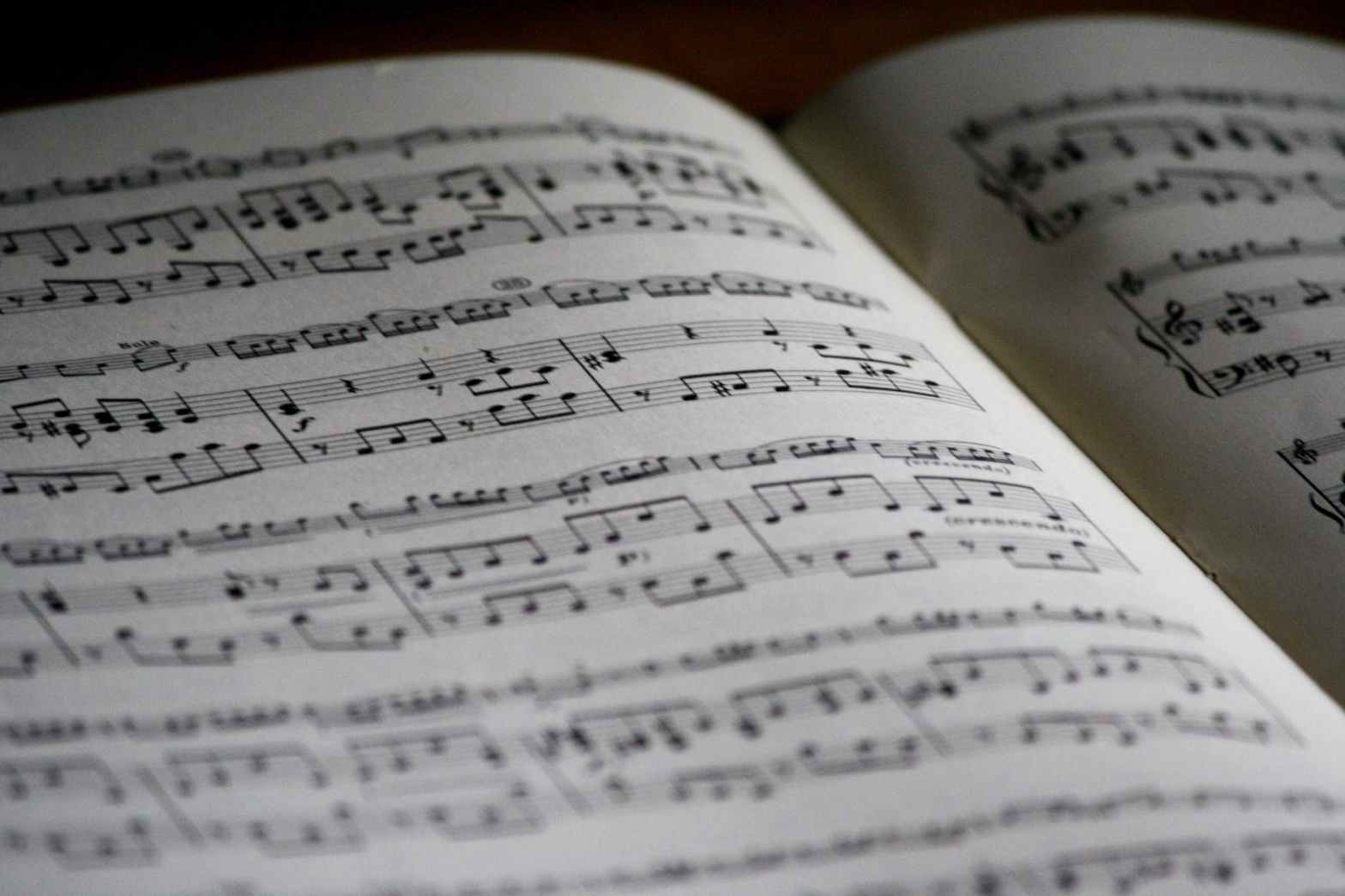
Almost all classical music students will say there are 4 periods in classical music history (or more or less the same): The Baroque Period, The Rococo Period, The Romantic Period, and The 20th Century Period. Each period has its own characteristics and breakthroughs.
A Brief History of Music
The Baroque Era is filled with harmony and rules. It emphasizes counterpoint, which can be interpreted as the conversations between different voices. They want balance; they want harmony. Notable composers during this era are: J. S. Bach, Vivaldi, Handel, Telemann…
The Rococo Era, or in a broader sense, the Classical Era, is where composers use the existing framework of 4-part harmony and expand those rules into a much colorful diatonic rulebook. Diatonic means that you can hear the tone of the piece; you can hear the key the piece is in; and you can easily identify instability, buildup, resolution, and other techniques fairly easily because of the rules.
The Romantic Era starts introducing more interesting concepts such as an expansion in chromaticism – using non-chord tones to enrich the melody and harmony. They start to focus more on expression and richness rather than focusing on a same set of rules. Although there are also rules to follow, the rules are getting more and more flexible.
The 20th century is where things start popping off. Composers like Debussy, Ravel, Shostakovitch, and many more start obscuring the tonality of their pieces. It’s not necessary to have an established key anymore, and they started to take those newfound freedom into more and more expressive compositions. In the end, atonality has found a huge foothold in classical music.
Then comes Contemporary Classical Music.
Contemporary Classical Music
I understand when people first listen to these kinds of music, they feel confused; they feel lost; and they, in extreme cases, feel irritated. It’s understandable because those composers have brought atonality into a new realm: complete chaos.
Of course, there are some composers who still retain tonality, melody, and harmony, such as some parts of minimalism. Nevertheless, this further expansion of atonality is still a huge part of contemporary classical music. So, how could we call this expansion? Atonality is already established in 20th century music, with its famous 12-tone theory (or dodecaphonic music) being developed and spread by Schoenberg. In contemporary classical music, this structure of atonality is once again shattered by more experimental and interpretive composers. It is being led into the realm of, as I would like to call it, amelodicality.
Being melodic is to be identifiable in terms of “where the piece is going”. Dodecaphonic music is understandably melodic because it does have a melodic progression. It’s just in a more mathematical, theoretical way. However, when this melody is being overthrown, the focus of the music isn’t in the musical contour. Rather, it is the rhythm, pure dynamics, and the sound it makes. In layman’s terms, instruments are becoming more of a special percussion instrument, each with its own uniqueness. The sounds clash around and make unique sounds that composers can experiment on. Amelodic compositions are still in an experimental phase because the sheer number of possibilities of sound combinations is extremely overwhelming when the melodic purpose of an instrument is no considered. Instead, when an instrument is viewed as a special percussion, it strips the instrument to its fundamental potential: how many sounds can this instrument make without adhering to past norms of playing? Just to demonstrate, here is an amelodic contemporary classical music piece (all credits go to their rightful owners):
There are more examples that actually involve sounds. A quick search on YouTube will take you to the world of amelodicality.
For other contemporary classical music composers, some chose minimalism, which, as the name suggests, promotes the simplicity of music. By stripping music to a very simple idea of a melody, a chord, or a rhythm, composers are able to use those elementary ideas to repeat, while maintaining the richness of those ideas. Composers don’t just repeat the same melody again and again mindlessly. They are using those elementary ideas to construct a seemingly simple, yet melodically, harmonically, and/or rhythmically diverse piece. “Repetition made interesting” can be a relatively accurate description of the purpose and the essence of minimalism.
So, where does this put contemporary classical music in? While some parts of it are clearly very experimental, some parts of it already developed itself into a unique genre of music, with some even inspiring other genres of music other than classical. Like how literature made itself diverse throughout history, classical music, and music as a whole, is experiencing the same thing: a process of diversifying genres. As we expand, modify, and sometimes outright ignore the rules we set in the past, we allow ourselves to experiment with, to go further in, and to pioneer the path of music. It is now impossible to judge contemporary classical music in a truly objective way, similar to how we cannot objectively judge a person’s value because of the ever-changing social norms. We can hate contemporary classical music, we can also dive into contemporary classical music. As time goes on, those music will associate themselves with contexts in philosophy, mathematics, and even computers.

